
P05.10-2272-06
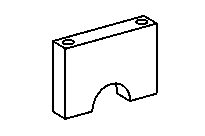
1 Retainer for timing chain (on the right)
2 Retainer for timing chain (on the left)
3 Holding bush
4 Torx screws
| Removing | ||
Danger! | Risk of explosion caused by oxyhydrogen gas. Risk of poisoning and caustic burns caused by swallowing battery acid. Risk of injury caused by burns to skin and eyes from battery acid or when handling damaged lead-acid batteries | No fire, sparks, open flames or smoking. Wear acid-resistant gloves, clothing and safety glasses. Only pour battery acid into suitable and appropriately marked containers. | |
1 | Disconnect ground cable from battery | Insulate clamping device of the ground line in order to prevent inadvertent contact with the ground point of the battery. | |
| Notes on battery | All models | |
Danger! | Risk of injury caused by fingers being jammed or pinched when removing, installing or aligning hoods, doors, trunk lid/rear-end door or sliding roof. | When moving components, ensure that no body parts or limbs are within the operating range of moving parts. | |
2 | Open engine hood and raise to vertical position | ||
3 | Remove partition wall between wheelhouses | ||
4 | Remove one spark plug from each cylinder | To ensure that the engine can be easily cranked when drawing in the timing chain and to avoid the timing chain skipping, see. | |
| Replace spark plugs | ||
5 | Remove cylinder head covers | ||
6 | Check the engine valve timing | If necessary: | |
Set the basic position of camshafts | |||
7 | Remove chain tensioner | ||
8 | Remove camshaft Hall sensor | ||
9 | Crank engine in direction of rotation until the link for separating the timing chain is easily accessible | The timing chain is separated one chain link next to the copper plate (on right). See new timing chain. | |
10 | Remove right camshaft bearing bridge | ||
11 | Install holding bush (3) onto right camshaft | Only fit Torx bolts (4). | |
Holding bush | |||
12 | Mount retainer for timing chain (on the right) (1) and retainer for timing chain (on the left) (2) for timing chain on the right and left cylinder head | Retainer | |
13 | Separate timing chain | Cover over timing case recess with a clean cloth. Parts which have fallen into the timing case recess, must be removed. | |
Connect the old chain to the new timing chain while pulling out the old timing chain. | |||
Chain separating tool | |||
Pressure screw | |||
Thrust pins | |||
Case | |||
| Installing | ||
14 | Draw in new timing chain | Always remove the assembly link after drawing in the new timing chain. These are only an assembly aid and not intended for engine running. | |
Pull in the new timing chain by turning the crankshaft in its standard direction of rotation. | |||
Assembly links | |||
Case | |||
15 | Remove retainer for timing chain (on the right) (1) and retainer for timing chain (on the left) (2) for timing chain on the right and left cylinder head | ||
16 | Rivet new timing chain | ||
| |||
Riveting tool | |||
Assembly inserts | |||
Open-end wrench | |||
Torque wrench | |||
Case | |||
17 | Crank engine in direction of rotation | ||
18 | Check the engine valve timing | ||
19 | Remove holding bush (3) from right camshaft | ||
20 | Fit right camshaft bearing bridge | ||
21 | Install camshaft Hall sensor | ||
22 | Installing chain tensioner | ||
23 | Install cylinder head covers | ||
24 | Install spark plugs | ||
| Replace spark plugs | ||
25 | Install partition wall between wheelhouses | ||
26 | Connect ground cable to battery | ||
Danger! | Risk of accident caused by vehicle starting off by itself when engine is running. Risk of injury caused by contusions and burns during starting procedure or when working near the running engine | Secure vehicle to prevent it from moving by itself. | |
27 | Conduct engine test run and check the engine for leaks whilst it is running | In the event of oil loss determine and eliminate cause, otherwise malfunctions, transmission damage, and serious environmental pollution may occur. | |
Danger! | Risk of injury caused by fingers being jammed or pinched when removing, installing or aligning hoods, doors, trunk lid/rear-end door or sliding roof. | When moving components, ensure that no body parts or limbs are within the operating range of moving parts. | |
28 | Close engine hood |
Camshaft
Number | Designation | Engines | |||
BA05.20-P-1001-01B | Bolt for camshaft sprocket | M1245 | Stage 1 | Nm | 50 |
Stage 2 | ° | 90 | |||


112 589 05 40 00
Assembly links
Holding bush
Retainer
Case
112 589 04 40 00
602 589 02 40 00
602 589 00 98 00


602 589 05 63 00
Thrust pins
Thrust spindle
Chain separating tool
Riveting tool
602 589 02 33 00
602 589 05 63 01
602 589 00 39 00


112 589 00 01 00
Torque wrench
Open end wrench
Assembly inserts
103 589 01 63 00
001 589 72 21 00
Referenced documents
- ah5410p000101a Notes on battery
- ah5410p000101a
- ap1510p1580rt Replace spark plugs
- ap1510p1580rtc Replace spark plugs
- ap1510p1580rts Replace spark plugs
- ar0120p5014rt Remove/install cylinder head cover
- ar0510p6858rt Checking engine valve timing
- ar0510p760101av Separate timing chain
- ar0510p760102av Rivet timing chain
- ar0510p760104av Drawing in timing chain
- ar0510p7800rt Remove/install chain tensioner
- ar0520p6020rt Setting basic position of camshafts
- ar0520p7103rt Remove/install camshaft bearing bridge
- ar1510p2000rt Remove/install camshaft Hall sensor
- ar5410p0003rt Disconnect/connect battery ground line
- ar6230p2400rt Remove/install partition wall between wheelhouses
- ar8840p1000rt Opening engine hood, moving to upright position and closing
- as0000z000501a Risk of accident from vehicle starting off by itself when engine running. Risk of injury (bruises and burns) resulting from working on the engine while it is being started or when it is running.
- as0000z001101a Risk of injury caused by fingers being jammed or pinched when removing, installing or aligning hoods, doors, trunk lid/rear-end door or sliding roof.
- as5410z000101a Risk of fire/risk of explosion due to short circuit and escaping oxyhydrogen gas. Risk of (burn) injury caused by caustic burns to eyes, skin and mucous membranes from battery electrolyte/mist, short circuit and arcing. Risk of