AR20.00-B-1030C | Remove grease and scale in the cooling system | 12.02.16 |
Cumbustion engine 457.914 with Vehicle 695.023
Cumbustion engine 475 with Vehicle 382.073, 382.070, 382.081, 382.087
Cumbustion engine 476 with Vehicle 382.084, 382.085, 382.083

B20.00-0054-01
B20.00-0055-01
B20.00-0011-01
Example for bus chassis, platforms and buses
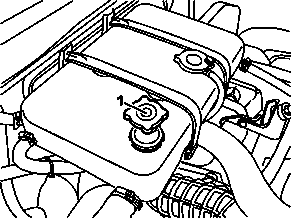
1 Filler neck cap
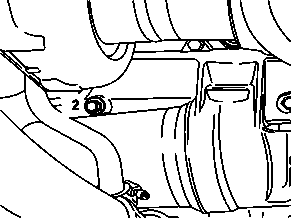
2 Drain plug
3 Drain plug
B20.00-0068-01
B20.00-0066-01
Engine 457.922/928
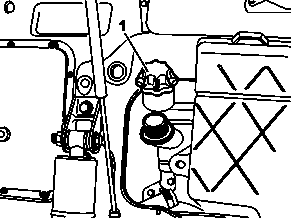
1 Cooling system reservoir cover
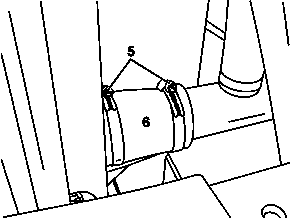
5 Clamp
Radiator's hose
Clean the grease | |||
| During the normal operation, if the engine tends to overheat without apparent reasons, the removal of incrustations and rust is recommended | ||
| Before the removal of the incrustation and rust the system must be free from grease, even if the coolant is apparently free from contamination by lubricant oil | ||
Danger! | Risk of accidents due to the accidental movement of the operating engine . Risk of injury due to being smashed or burned during the start-up procedure or when the engine is operating | Make sure the vehicle is prevented to accidentally move. Wear work clothes well tight and closed. Do not touch heated or moving parts. | |
Danger! | Risk of injury at the skin and eyes due to burns caused by steam or overheated coolant. Risk of poisoning due to ingestion of coolant | Open the cooling system only when the temperature is below 90 °C. Open the cap slowly and allow the surplus of pressure to go out. Coolant must never be kept in beverage recipients. Open the cooling system only when the temperature is below 90 °C. | |
| With the engine cold or up to a maximum temperature of 50oC | ||
1.1 | Remove the plug (3) located at the bottom part of the radiator and the plug (2) located at the oil cooler head and drain completely the cooling system | For the engines 457.915/916/925/929/931/932; 475.9 and 476.9. | |
1.2 | Unfasten the clamp (5) and remove the hose (6) from the bottom part of the radiator | For the engines 457.922/928. | |
If a heating system is present, put previously its control in the heating position and pay attention to have the tap opened. | |||
In the case of buses, the taps located in the engine compartment must be opened and the draining taps at the tubes next to the heating radiator. | |||
Eliminate the coolant in an environment friendly manner. | |||
2 | Remove the thermostatic valves | For engines 475.9, 476.9 | |
For engines 457.922/928/931 | |||
For engines 457.915/916/925/929/932 | |||
3 | Install two thermostatic valves used blocked at the maximum opening to ensure that the whole flow circulates in the radiator | ||
| Preparation of the blocked thermostatic valves at maximum opening condition | The blocked valve permits the complete circulation of the liquid by the cooling system at any temperature. | |
Valve opening travel for the engine 457.9 | |||
Valve opening travel for the engine 475.9476.9. | |||
4 | Install the drain plug | ||
5 | Open the coolant supply mouth cap (1), and supply the cooling system with the detergent solution | Mix of clean water and 5% of detergent product (50g detergent product, for every 950 grams of water). | |
Do not use soda caustic soda (sodium hydroxide) or other very alkaline product. Such products negatively affect the aluminum components of the colling system. | |||
6 | Actuate the engine up to intermediate rotation up to reaching a temperature of 80oC and keep it in this temperature for 20 minutes, if necessary, cover the radiator | ||
7 | For the engine, wait until the temperature goes down up to 50oC | ||
8 | Remove the lower hose or plug (3) of the radiator and the plug (2), drain completely the cooling system's solution | Eliminate the cooling system's solution in an environment friendly manner. | |
Repeat consecutively, twice, the operations of supply, engine operation and draining, mentioned below. | |||
9 | Open the cover (1) of the cooling system and supply immediately the system with clean water | ||
10 | Operate the engine for 5 minutes | ||
11 | With the engine at a temperature under 50oC, remove the lower hose or the plug and drain completely the cooling system | Eliminate the coolant in an environment friendly manner. | |
| Check | ||
12 | Check if it is necessary to clean the incrustations/rust | If it is necessary to clean the incrustations/rust, follow the steps explained below: | |
Clean incrustations/rust deposits | |||
13 | Fill the cooling system with descaling solution | Solution of water and citric acid, in a 10% proportion (100 cm3of citric acid for every 900 grams of water). | |
14 | Operate the engine at average rotation until the temperature reaches 80oC and keep it at this temperature for 10 minutes, approximately | ||
15 | Stop the engine, wait until the temperature goes down up to approximately 50oC | ||
16 | Drain completely the cooling system's solution | ||
17 | Rinse the cooling system at least three times, with clean water and at each rinsing operation, operate the engine for 5 minutes | ||
18 | Remove the blocked valves at their maximum opening or permanent opening | ||
19 | Install the thermostatic valves | For engines 475.9, 476.9 | |
For engines 457.922/928/931 | |||
For engines 457.915/916/925/929/932 | |||
20 | Install and tighten the draining plugs, if there are no plugs, or install the lower hoses | ||
21 | Supply with coolant | Anti-corrosion and antifreeze solution: | |
| Change the coolant | Buses | |
| Trucks |
Coolant thermostat
Número | Denominação | Engine 457.9 | |||
BE20.10-B-1002-02B | Main valve | Maximum opening | of C | 95 | |
Minimum stroke | mm | 8 | |||
Coolant thermostat
Número | Denominação | 475.9 engine; 476.9 | |||
BE20.10-B-1002-02C | Main valve | Maximum opening | °C | 95 | |
Minimum stroke | mm | 8 | |||
Produtos para reparos
Número | Denominação | Número de pedido |
BR00.45-B-1003-04A | Degreasing | P3 AL 580 E |
BR00.45-B-1004-04A | Deep cleaner | Citric acid |
Documents référencés
- ap2000b2080a Remplacer le liquide de refroidissement
- ap2000b2080b Remplacer le liquide de refroidissement
- ar2010b2460c
- ar2010b2460d
- ar2010b2460e
- as0000b000501a Risque d'accident si le véhicule démarre tout seul alors que le moteur tourne. Risque de blessure par contusions et brûlures au cours des interventions durant le démarrage et lorsque le moteur tourne
- as2000b000101a Risque de brûlure de la peau et des yeux par les projections de liquide de refroidissement brûlant. Risque d'intoxication par ingestion de liquide de refroidissement
- wf5850b200201a