
W01.00-1095-09
1 | Endoscope | 2 | Cylinder inspection lamp | 3 | Heat protection sleeve |
| Remove | ||
Warning | Risk of accident from vehicle starting off by itself when engine running. Risk of injury (bruises and burns) resulting from working on the engine while it is being started or when it is running. | Secure vehicle to prevent it from starting off by itself. Wear closed and snug-fitting work clothes. Do not touch hot or rotating parts. | |
Warning | Risk of injury caused by body parts being pinched or crushed as cab is tilted | Ensure that no one is within the tilting range of the cab as it is being tilted. Always tilt the cab all the way to the end position and secure it with the safety strut. | |
Warning | Risk of injury. Skin or eye injuries may result when handling hot or glowing objects. | Wear protective gloves, protective clothing and safety glasses, if necessary. | |
Topical note | Notes on tilting the cab | ||
Topical note | Notes on avoiding damage through contamination and foreign objects | ||
1 | Start engine and bring to normal operating temperature then switch off engine | Coolant temperature approx. 80°C. | |
2 | Tilt cab | ||
3 | Remove soundproofing | ||
4 | Attach turning device for engine | ||
Bolt, turning device to flywheel housing | |||
Turning device | |||
5 | Remove cylinder head cover | ||
6 | Remove high-pressure lines from rail to injection nozzle | ||
7 | Remove fuel injectors | ||
Illuminate | |||
8 | Close endoscope (1) on cylinder inspection light (2) and switch on | Pay attention to manufacturer's operating instructions. Use endoscope (1) with a diameter of 8.9 mm. | |
9 | Lead endoscope (1) through the bore of the protective sleeve (3) of the cylinder to be checked | | |
The ambient temperature must be 80°C. | |||
10 | Position piston on cylinder to be checked at bottom dead center | Check position of piston through the endoscope (1) and turn crankshaft using the turning device. | |
11 | Check condition of cylinder barrel, piston crown, clearance volume and valves | ||
Notes for evaluation of a cylinder barrel | |||
In case of damage or when in doubt: | |||
| |||
Remove cylinder head. | |||
12 | If applicable, check remaining cylinders in the same way | All cylinders can be checked using 3 crankshaft positions: cylinder 1 and 6, 2 and 5 or 3 and 4. | |
| Install | ||
13 | Install fuel injectors | ||
14 | Install high-pressure lines from rail to injection nozzle | ||
15 | Fill low-pressure fuel circuit at engine | ||
16 | Install cylinder head cover | ||
17 | Remove turning device for engine | ||
Bolt, TDC inspection hole cap to flywheel housing | |||
Turning device | |||
18 | Install soundproofing | ||
19 | Tilt back cab |
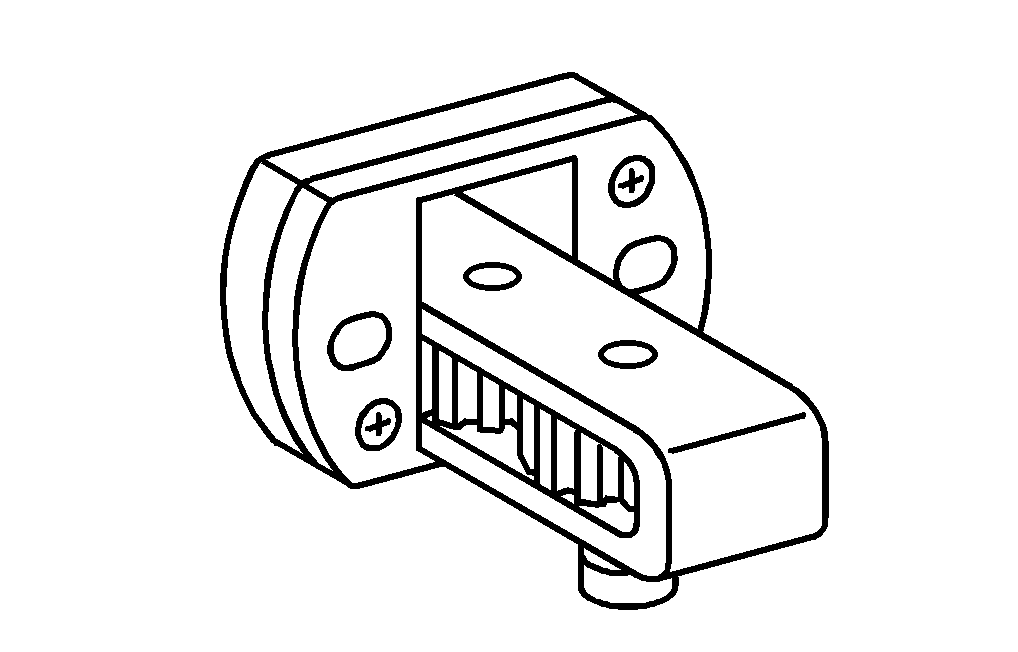
904 589 04 63 00
Turning device
Referenced documents
- ah0000n500001h Notes on avoiding damage through contamination and foreign objects
- ah0140n000103a Notes for evaluation of a cylinder barrel
- ah6080n000301a Notes on tilting the cab
- ar0120w5014md Remove/install cylinder head cover
- ar0130w5800md Remove/install cylinder head
- ar0330w160003md Attach/detach cranking/blocking device for engine
- ar0703w0004md Remove/install fuel injectors
- ar0716w1003md Remove/install high-pressure line to fuel injector
- ar0716w1007md Fill fuel low-pressure circuit on engine
- as0000z000201a Risk of injury. Skin or eye injuries may result when handling hot or glowing objects.
- as0000z000501a Risk of accident from vehicle starting off by itself when engine running. Risk of injury (bruises and burns) resulting from working on the engine while it is being started or when it is running.
- as6080z000101a Risk of injury caused by body parts being pinched or crushed as cab is tilted