
1 | Fuel cell cover |
P06.00-2049-05
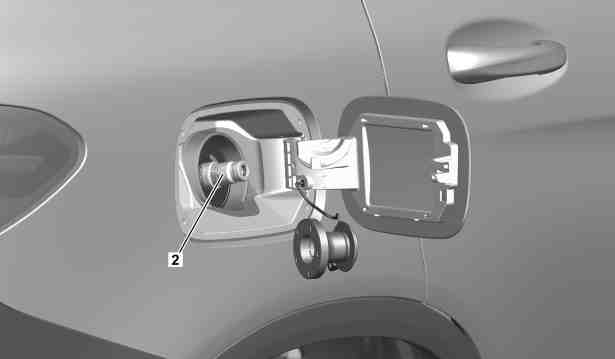
2 | Filler neck |
P06.00-A005-05
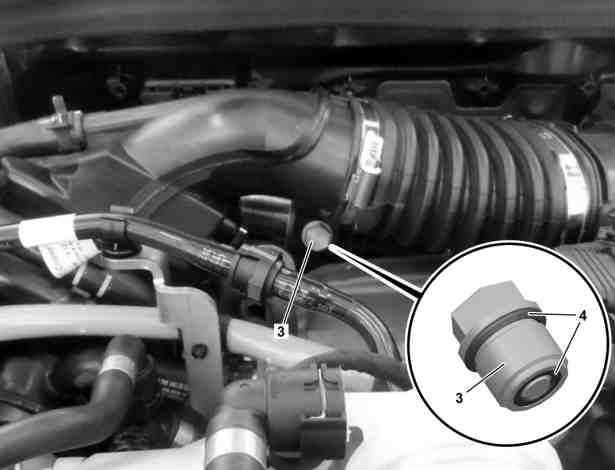
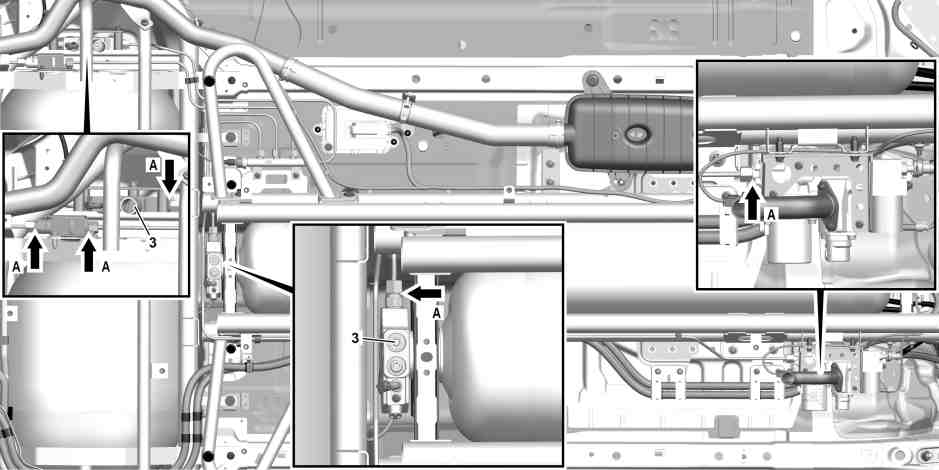
3 | Plug |
P06.00-A021-06
P06.00-A014-09
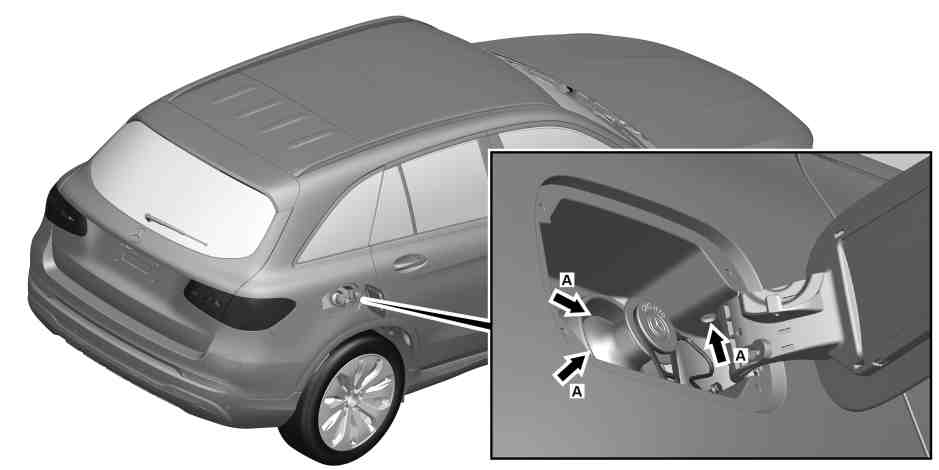
Pfeil A | High-pressure test point |
P06.00-A006-09
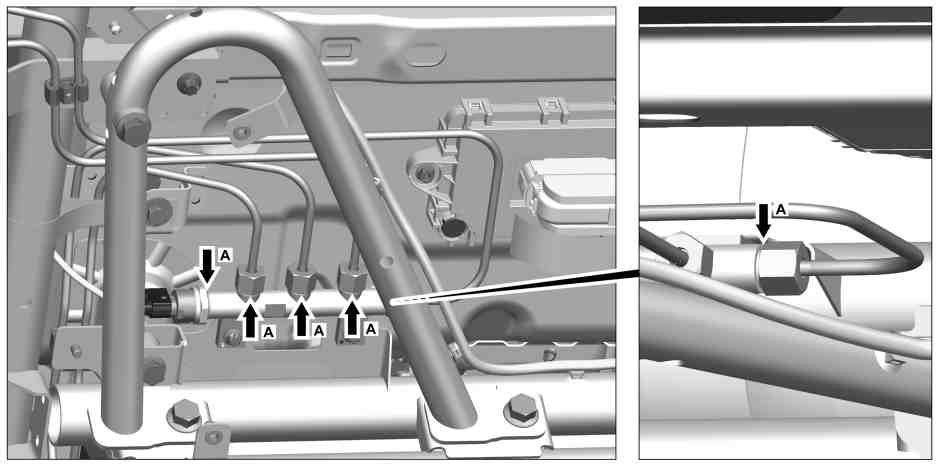
Pfeil A | High-pressure test point |
P06.00-A015-09
Pfeil A | High-pressure test point |
P06.00-A013-09
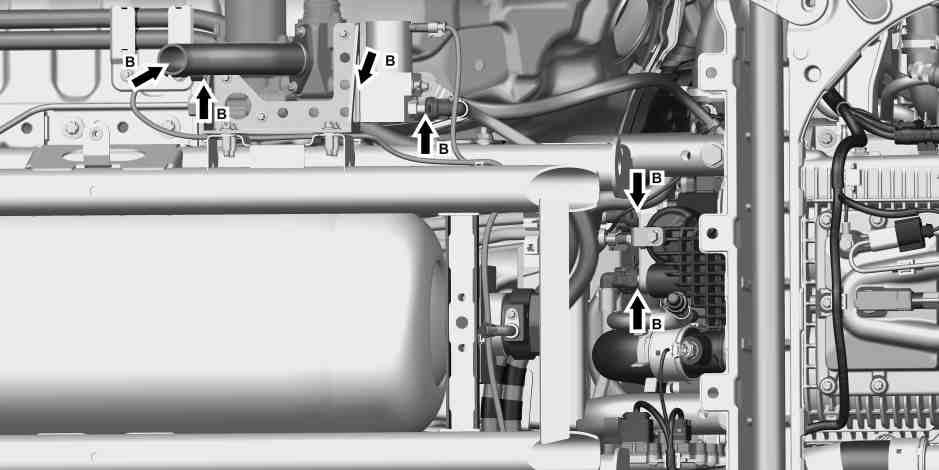
Pfeil B | Medium-pressure test point |
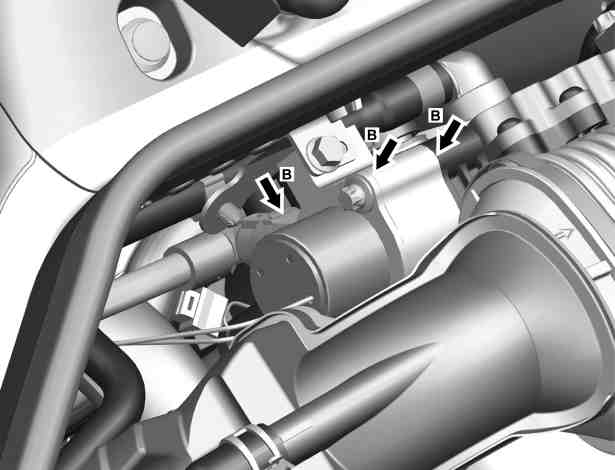
Pfeil B | Medium-pressure test point |
P06.00-A011-06
Danger | Risk of suffocation due to inhalation of inert gases. Risk of injury when working on pressurized parts. | Wear safety glasses and protective gloves. Work in well-ventilated rooms only. | |
Danger | Risk of explosion caused by escaping hydrogen or overheating of the fuel tanks when working on the hydrogen system. Risk of frostbite to body parts caused by escaping gas and by touching component parts carrying gas when emptying fuel tanks. Risk of asphyxiation caused by inhalation of air diluted by hydrogen. Risk of burn injuries by coming into contact with an invisible pale blue hydrogen flame. | ||
Topical note | Notes on fuel cell system | ||
Notes on safety-relevant components | |||
Identify the location of the leak on the fuel cell system with diagnostic support | |||
1 | Release pressure in fuel cell system with vehicle diagnosis system. | ||
2 | Ensure that the requirements for driving into the workshop are fulfilled. | ||
Topical note | Requirements for driving into the workshop | ||
3 | Print out "tank system, fuel cell, form event log," fill out, and attach to the vehicle somewhere clearly visible. | ||
| |||
4 | Remove fuel cell cover (1). | ||
5 | Remove transmission tunnel underfloor paneling and underfloor paneling upstream of the rear axle. | ||
6 | Check the fuel tank for external damage. | ||
7 | Fill the high-pressure line system with 20 to 50 bar forming gas via the filler neck (2). | ||
| 000 588 21 21 00 Leak tester | ||
Pressurize fuel system | |||
| Connect STAR DIAGNOSIS and read out fault memory | ||
The manual valves of both fuel tank must have been sealed. | |||
Use commercially available forming gas bottle bundles. | |||
8 | Check specified value 20 to 50 bar with diagnostic system. | ||
| Connect STAR DIAGNOSIS and read out fault memory | ||
9 | Relieve pressure in filling nozzle and remove filling nozzle. | ||
10 | Perform a leak test at 20 to 50 bar on the high-pressure test points (arrows A). | ||
| 000 588 03 21 00 Gas detector | ||
Use safety glasses and protective gloves. | |||
Specified value at all high-pressure test points (arrows A): under 20 ppm with a measurement duration of 10 to 30 s. | |||
If a leakage has been clearly localized, | |||
| |||
release the pressure of the forming gas in the fuel cell system with a diagnostic device, and then perform repair work. | |||
| |||
To do this, select the following menu item: | |||
11 | Fill the high-pressure line system with 700 bar forming gas via the filler neck (2). | ||
| 000 588 21 21 00 Leak tester | ||
| Connect STAR DIAGNOSIS and read out fault memory | ||
Pressurize fuel system | |||
12 | Relieve pressure in filling nozzle and remove filling nozzle. | Pressurize fuel system | |
13 | Perform a leak test on the high-pressure test points (arrows A) at 700 bar. | ||
| 000 588 03 21 00 Gas detector | ||
Use safety glasses and protective gloves. | |||
Specified value at all high-pressure test points (arrows A): under 20 ppm with a measurement duration of 10 to 30 s. | |||
If a leakage has been clearly localized, | |||
| |||
release the pressure of the forming gas in the fuel cell system with a diagnostic device, and then perform repair work. | |||
| |||
To do this, select the following menu item: | |||
14 | Fill the medium pressure line system with 9 to 14 bar forming gas via the diagnostic system. | ||
| |||
The forming gas in the high-pressure line system is sufficient for filling. | |||
To do this, select the following menu item: | |||
15 | Perform a leak test at the medium pressure test points (arrows B, C) as well as all components in the medium pressure line system. | ||
| 000 588 03 21 00 Gas detector | ||
Use safety glasses and protective gloves. | |||
Specified value at all medium pressure test points (arrows B, C): under 20 ppm with a measurement duration of 10 to 30 s. | |||
If a leakage has been clearly localized, | |||
| |||
release the pressure of the forming gas in the fuel cell system with a diagnostic device, and then perform repair work. | |||
| |||
To do this, select the following menu item: | |||
16 | Perform a fuel cell leak test. | If no leaks were detected in the previous test steps. | |
Identify the location of the leak on the fuel cell system without diagnostic support | |||
17 | Only perform the following operation steps if diagnosis-based localization of the leak cannot be performed. | ||
18 | Print out the "Manual depressurization event log" form and fill it out during the procedure. | ||
| Manual depressurization event log, form | ||
19 | Manually release the pressure in the fuel cell system. | ||
20 | Ensure that the requirements for driving into the workshop are fulfilled. | ||
Topical note | Requirements for driving into the workshop | ||
21 | Print out the "Protokoll Tanksystem, Formular" (tank system event log form), fill it out, and attach to the vehicle in a place where it is easily visible. | ||
| |||
22 | Remove fuel cell cover (1). | ||
23 | Remove transmission tunnel underfloor paneling and underfloor paneling upstream of the rear axle. | ||
24 | Check the fuel tank for external damage. | ||
25 | Fill the high-pressure line system with 20 to 50 bar forming gas via the filler neck (2). | ||
| 000 588 21 21 00 Leak tester | ||
Pressurize fuel system | |||
The manual valves of both fuel tank must have been sealed. | |||
Use commercially available forming gas bottle bundles. | |||
26 | Relieve pressure in filling nozzle and remove filling nozzle. | ||
27 | Perform a leak test at 20 to 50 bar on the high-pressure test points (arrows A). | ||
| 000 588 03 21 00 Gas detector | ||
Use safety glasses and protective gloves. | |||
Specified value at all high-pressure test points (arrows A): under 20 ppm with a measurement duration of 10 to 30 s. | |||
If a leakage has been clearly localized, | |||
| |||
Manually release the pressure in the fuel cell system, then perform repair work. | |||
Manually release pressure in fuel cell system | |||
| |||
28 | Fill the high-pressure line system with 700 bar forming gas via the filler neck (2). | ||
| 000 588 21 21 00 Leak tester | ||
Pressurize fuel system | |||
29 | Relieve pressure in filling nozzle and remove filling nozzle. | ||
30 | Perform a leak test on the high-pressure test points (arrows A) at 700 bar. | ||
| 000 588 03 21 00 Gas detector | ||
Use safety glasses and protective gloves. | |||
Specified value at all high-pressure test points (arrows A): under 20 ppm with a measurement duration of 10 to 30 s. | |||
If a leakage has been clearly localized, | |||
| |||
Manually release the pressure in the fuel cell system, then perform repair work. | |||
Manually release pressure in fuel cell system | |||
| |||
31 | Unscrew the stop plug (3). | Ensure scrupulous cleanliness. No chippings, friction or dirt must enter the fuel cell aggregate. | |
32 | Screw in the connection piece on the freed thread. | Connector | |
33 | Screw the adapter onto the connection piece. | ||
| 253 588 01 21 00 Adapter | ||
34 | Connect the filling hose of the leak test device to the adapter and fill the medium pressure line system with 9 to 14 bar forming gas. | ||
| 253 588 01 21 00 Adapter | ||
| 000 588 19 21 00 Leak tester | ||
The high-pressure line system must not be depressurized, a counterpressure of 20 bar is required. | |||
Te filling hose of the leak test device remains connected during the following leak test. | |||
35 | Perform a leak test at the medium pressure test points (arrows B) as well as all components in the medium pressure line system. | ||
| 000 588 03 21 00 Gas detector | ||
Use safety glasses and protective gloves. | |||
Specified value at all medium pressure test points (arrows B): under 20 ppm with a measurement duration of 10 to 30 s. | |||
36 | Release the pressure in the medium pressure line system via the leak test device. | ||
| 000 588 19 21 00 Leak tester | ||
37 | Remove the filling hose of the leak test device from the adapter. | ||
| 253 588 01 21 00 Adapter | ||
| 000 588 19 21 00 Leak tester | ||
38 | Unscrew the adapter from the connection piece. | ||
| 253 588 01 21 00 Adapter | ||
Connector | |||
39 | Unscrew the connection piece. | Connector | |
40 | Manually release the pressure in the fuel cell system. | ||
| |||
41 | If no leaks were detected in the previous test steps, inform the relevant market support people. |

253 589 00 91 00
Connector
Henviste dokumenter
- ad0000p200004b
- ah0000p002101rfw Betingelser for indkørsel til værkstedet
- ah0000p002201rfw Oplysninger om brændselscellesystem
- ah0000z001901a Oplysninger om sikkerhedsrelevante komponenter
- ar0600p0004rfw
- ar0600p1000rfw
- ar0600p1001rfw
- ar4760p001701rfw Brændstofsystem påvirkes med tryk
- ar6130p1001rfw
- as0000z003001b Fare for eksplosion som følge af udstrømmende brint eller overophedning af brændstoftanke under arbejde på brintanlægget. Fare for forfrysninger på legemsdele som følge af udstrømmende gas og som følge af berøring af gasførende
- as0000z003401rfw Fare for kvælning ved indånding af inaktiv gas. Fare for personskade ved arbejde på dele, der står under tryk.
- of0000p300021rfw Protokol tanksystem, brændselscelle, formular
- of0000p300022rfw Protokol manuel trykreduktion, formular
- ws4700p0019b
- ws4700p0043b
- ws4700p0045b
- ws8300p0035b